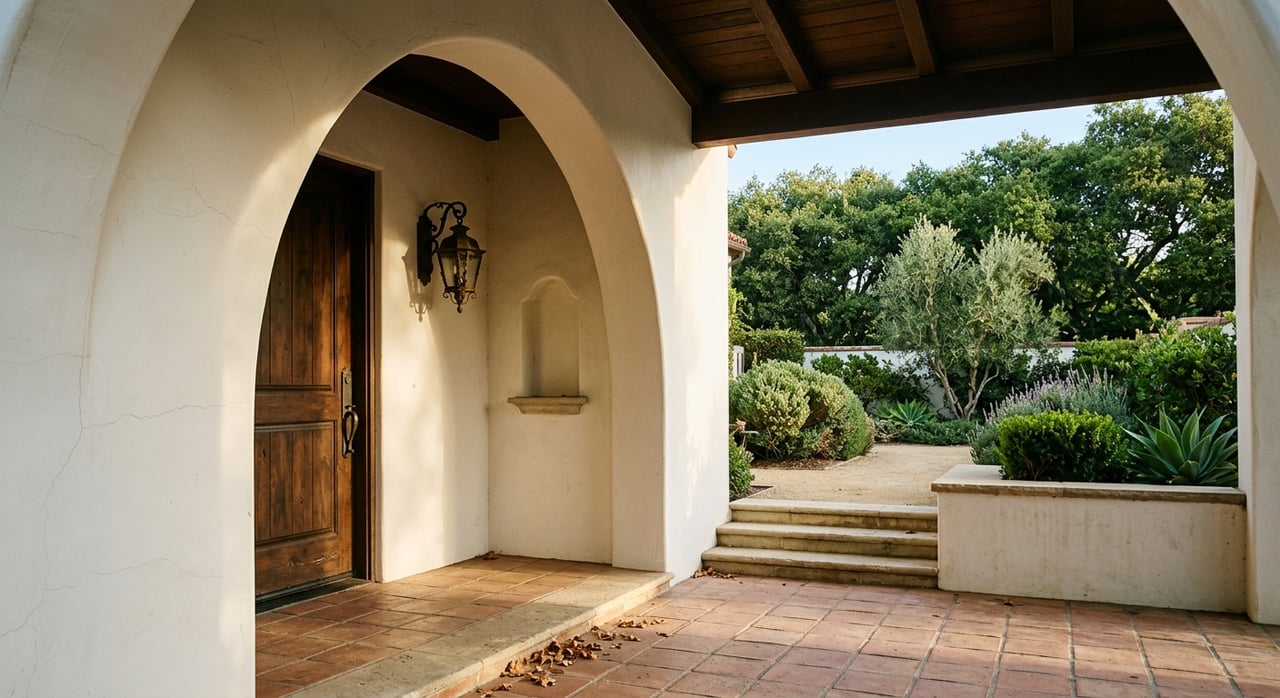
Living in Atherton: Everyday Lifestyle & Community
April 23, 2026
April 23, 2026
Looking for a place where daily life feels calm, private, and residential, yet some of the Peninsula’s best dining and cultural options are still nearby? That balance is a big part of what makes Atherton stand out. If you are exploring the town as a buyer, seller, or future resident, it helps to understand what everyday life actually looks like here and how it differs from neighboring communities. Let’s dive in.
Atherton is a small Peninsula town with an estimated 7,022 residents across 5.02 square miles, according to the U.S. Census Bureau’s QuickFacts. That adds up to a low-density setting compared with many nearby communities, which shapes the pace of daily life.
The town’s official housing information emphasizes preserving small-town character, open space, and heritage trees. It also notes that land use remains mainly single-family residential and institutional, which helps explain why Atherton feels more like a quiet home base than a busy mixed-use downtown.
For many residents, that means your day-to-day experience is shaped less by storefront activity and more by tree-lined streets, residential blocks, and civic spaces. If you value privacy and a more insulated neighborhood feel, Atherton offers a very distinct Peninsula lifestyle.
Atherton is not trying to be a commercial hub. The town’s own planning materials make it clear that housing development is constrained by land availability and that preserving open space and established character remains a priority.
That focus influences how life unfolds here. You are more likely to think in terms of home, park, school, and nearby downtown access rather than stepping out into a dense restaurant district. For buyers comparing Atherton with places like Menlo Park or Palo Alto, this difference is one of the most important lifestyle factors to understand.
The town also supports neighborhood quality of life through programs tied to traffic and stewardship. Official materials highlight local attention to neighborhood traffic management, recreation, and tree preservation, all of which reinforce Atherton’s quiet and residential identity.
One of the clearest anchors of local life is Holbrook-Palmer Park. The town describes it as a 22-acre municipally owned garden setting with a ball field, tennis courts, a playground, gardens, walking paths, and rentable facilities including the Main House, Jennings Pavilion, and Carriage House.
That kind of civic green space gives residents a reliable place to spend time outdoors close to home. Whether you are taking a walk, heading to the playground, or attending a seasonal event, the park plays a meaningful role in the weekly rhythm of the community.
The town also uses Holbrook-Palmer Park for recurring summer concerts, movies, and family-oriented programs. In a town without a traditional commercial center, spaces like this help create moments of connection and shared local life.
Another important local institution is the Atherton Library. It offers room and equipment reservations, Wi-Fi, mobile hotspots, curbside services, and an active events calendar, with construction underway on a Children’s Garden.
That matters because libraries often say a lot about how a community functions day to day. In Atherton, the library is not just a place to check out books. It serves as a useful neighborhood resource for families, students, and remote workers who want access to services, events, and flexible civic space.
If your lifestyle includes work-from-home routines or regular community programming, the library adds practical value to everyday living. It is one more example of how Atherton’s local life centers on civic amenities rather than retail corridors.
Atherton’s civic structure also says a lot about what residents value. The town’s Park & Recreation Committee advises on recreation areas, activities, and facilities, while the Tree Committee helps maintain the urban forest and guide landscaping on public lands.
These are not small details. They show that parks, trees, and neighborhood stewardship are part of the town’s identity, not just nice extras. For someone considering a move, that can signal a place where quality of life is closely tied to landscape, maintenance, and long-term care of public spaces.
School activity is another major part of everyday life in Atherton. The town’s official schools page notes that multiple public districts serve the area, including Menlo Park City School District, Las Lomitas Elementary School District, Redwood City School District, and Sequoia Union High School District, along with private institutions such as Sacred Heart Schools and Menlo School.
The town’s police department also notes that the population rises sharply during weekdays because of the schools located within town limits, and it describes Atherton as having an extremely low crime rate, as referenced on the town’s housing page. That means weekday traffic patterns and daily activity can feel different from what the town’s residential quiet might suggest at first glance.
For buyers, this is a reminder that Atherton’s lifestyle is shaped not only by its homes and lots, but also by the institutions woven into the community. Even in a very private setting, school-related movement helps define the town’s daytime rhythm.
Because Atherton is primarily residential, much of the restaurant scene is found in neighboring downtowns. In Downtown Menlo Park, the city describes a vibrant, walkable mix of eateries and shops, along with outdoor dining and seasonal concerts at Fremont Park.
That gives Atherton residents a convenient option when you want a more active evening or a casual meal out. Instead of living above the activity, you can choose when to tap into it.
Redwood City offers another nearby dining outlet. The city says downtown dining in Redwood City can take visitors around the world within 15 minutes of Courthouse Square, showing the range available a short drive from Atherton.
Palo Alto adds yet another layer of cultural and civic activity. City documents describe its downtown as a regional center and international destination, and the Palo Alto Art Center serves about 140,000 people annually through exhibitions, classes, camps, special events, and family programs.
This is one of the most helpful ways to understand Atherton. Home life tends to be quieter and more private, while restaurants, arts, events, and more animated public spaces are generally found nearby in Menlo Park, Palo Alto, or Redwood City.
That distinction can be a major advantage if you want separation between where you live and where you go for activity. You can enjoy a more residential setting day to day without feeling cut off from Peninsula amenities.
For many buyers, this balance is the point. Atherton offers a quieter foundation, and the surrounding communities fill in the dining, shopping, and cultural options when you want them.
Atherton’s commuting pattern also reflects its residential character. The Census Bureau reports a mean travel time to work of 23.2 minutes, suggesting a commuter-oriented Peninsula lifestyle for many residents.
One practical detail to know is that Atherton no longer has an operating Caltrain station. Caltrain announced that the station was permanently closed in December 2020, with service shifted to nearby Menlo Park and Redwood City.
For daily life, that means train access is still nearby, but not inside town. If transit options matter to you, it is worth thinking about Atherton as a place where driving to surrounding stations and downtowns is often part of the routine.
If you are choosing between Atherton, Menlo Park, and Palo Alto, the lifestyle differences are meaningful. Menlo Park and Palo Alto present more downtown-centered, walkable, and service-rich environments, while Atherton’s official materials focus more on housing, schools, parks, trees, and neighborhood traffic management.
That does not make one setting better than another. It simply means the fit depends on how you want your everyday life to feel. If you want more commercial energy outside your front door, nearby downtowns may appeal more. If you want a quieter residential environment and are comfortable going elsewhere for dining and activity, Atherton may feel like the right match.
When people search for homes in Atherton, they are often evaluating more than square footage or lot size. They are also asking what daily life will feel like once the move is done.
In Atherton, the answer is shaped by civic green space, a strong residential identity, school-centered daytime activity, and easy access to nearby downtowns for dining and culture. For the right buyer, that combination can be hard to replicate elsewhere on the Peninsula.
If you are thinking about buying or selling in Atherton, local context matters. Alexander Kalla offers a consultative, data-informed approach to Peninsula real estate, helping you evaluate not just the property, but the lifestyle that comes with it.
Stay up to date on the latest real estate trends.

A global citizen with roots in five countries, this real estate professional leverages multilingual skills to build strong relationships and advocate for clients. Expect dedication and a worldly approach. Connect today to begin your real estate journey!
Alexander Kalla | CA DRE# 02125546
16780 LARK AVE, LOS GATOS, CA 95032